The Order Browser gives you a centralized, order-level view of Aftersell performance. Use it to see which orders were eligible for a post-purchase offer, whether an offer was shown, how customers interacted with each offer slot, and where there are gaps in your setup.
The Order Browser covers Post-Purchase (PPU), Thank You Page (TYP), and Rokt Thanks experiences. Coming soon: Checkout timeline data will be added in a future update.
To access it, navigate to: Apps → Aftersell → Order Browser in your Shopify admin.You can also jump directly to a specific order’s detail page from Shopify. When viewing any order in your Shopify admin, open the More actions menu and select Open order browser. This takes you straight to that order’s Aftersell detail page without needing to search for it.
At the top of the Order Browser, three metrics give you a quick pulse on performance for your selected date range.
Metric
What it means
Total orders
Every order received in the selected period — eligible and ineligible combined
Total offers shown
How many of those orders actually had an offer displayed
Upsell Revenue
Total revenue generated from accepted offers
The Order Browser defaults to the Last 30 days. Use the date picker in the top-right corner to adjust the range. Data is available from February 25, 2026 onward — the picker will not let you select an earlier start date. Every summary metric, Total orders included, reflects only the range you have selected.Use the Export button (also top-right) to download the current view as a CSV. The export respects any filters you have active, so filter first if you only want a subset of orders. The CSV includes the following columns, in this order: Order, Date, Eligibility, Sales channel, Total, Currency, PPU Funnels, PPU status, PPU offer 1, PPU offer 2, PPU offer 3, TYP Funnels, TYP status, Rokt Thanks status, Payment Gateway, and Payment Wallet. There is no column picker, so every export contains all sixteen. The Rokt Thanks status column shows the same values as the on-screen badge (Accepted, Shown, not accepted, No offer shown, Not loaded). If your store does not have Rokt Thanks enabled, the column is included but the cells are empty.
Order data updates every few minutes, so a very recent order may take a short while to appear. Reload the page if you are waiting on one.
Below the summary bar, three panels break down your performance in more detail. Together they help you quickly spot eligibility issues, configuration gaps, and opportunities to improve coverage.
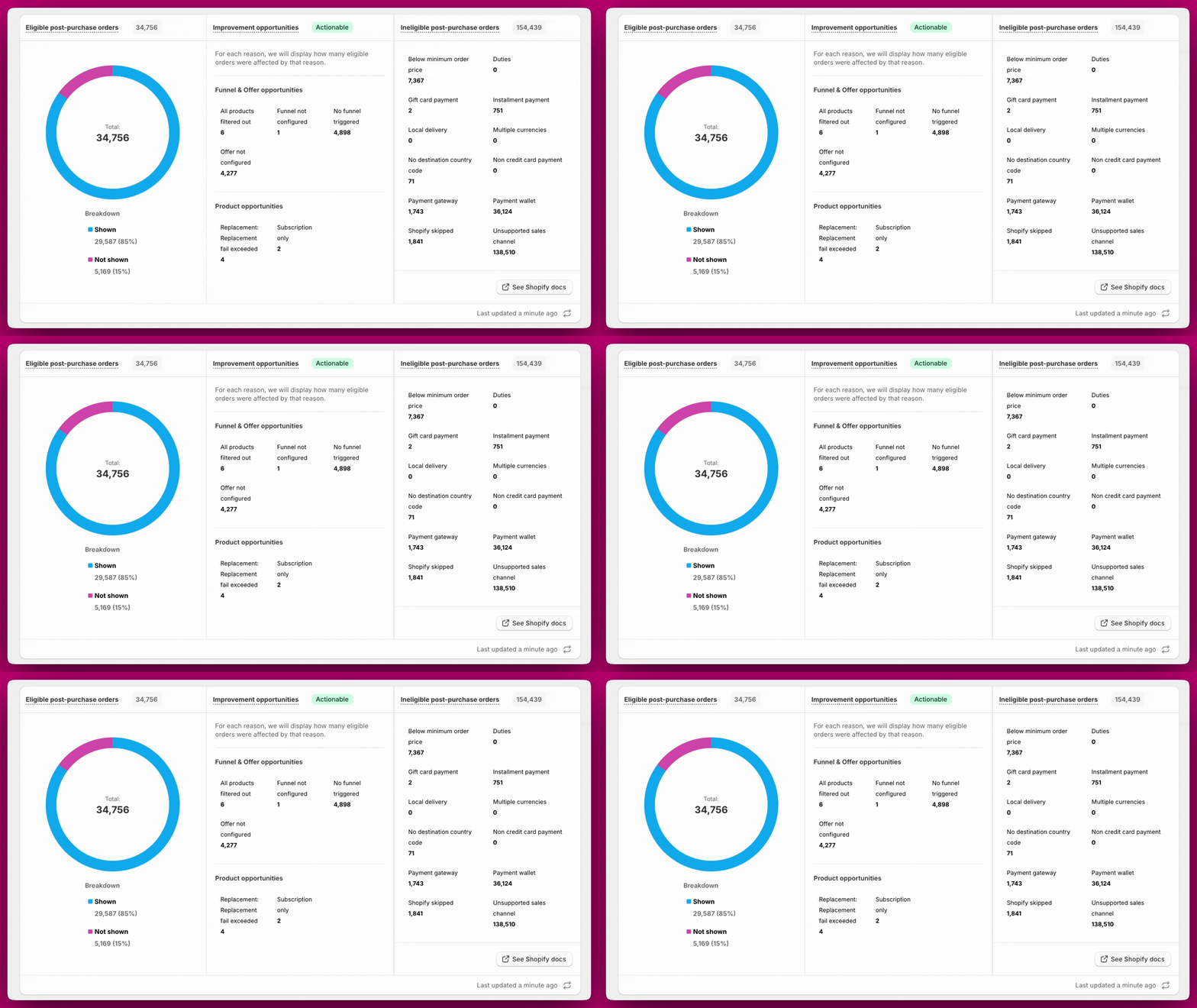
Shows the total count of eligible orders with a donut chart breaking them down by Shown vs Not shown. A high “Not shown” proportion usually points to funnel configuration gaps, product filtering, or Shopify eligibility issues. See the Order Browser Troubleshooting guide for next steps.
This panel highlights eligible orders where at least one offer didn’t render because of funnel, offer, or product configuration gaps. Some of these orders may have shown other offers — fixing these gaps widens overall coverage. The panel is split into two categories: Funnel & Offer opportunities and Product opportunities. For each reason, the panel shows how many eligible orders were affected.Funnel & Offer opportunities
No funnel triggered
What it means: An eligible order came through but no funnel matched its trigger conditions.What to do: Create a catch-all funnel using the Show for All Customers trigger and set it to the lowest priority so it fires whenever no other funnel matches.
Offer not set up
What it means: A funnel ran but one or more offer slots had no offer set up.What to do: Go to the funnel and add an offer to the empty slot.
Funnel not set up
What it means: A funnel matched the order but has no offers configured, so nothing could be shown.What to do: Open the funnel and add an offer to at least one slot.
No active funnels
What it means: Your store had no active funnel available to serve this order at all.What to do: Create a funnel and enable it.
All offers filtered out
What it means: A funnel was configured and matched the order, but every product across all offer slots was filtered out by your targeting or filter rules before anything could display.What to do: Review your funnel’s product filters and targeting rules. Broaden the filter criteria or add fallback products to ensure at least one offer has something eligible to show.
All products filtered
What it means: An individual offer slot ran but every product in it was filtered out before the offer could display.What to do: Review the offer’s filter settings and add more fallback products so there is always something eligible to show.
No product set
What it means: An offer slot exists but no product has been chosen for it.What to do: Open the funnel and pick a product for that slot.
No template set
What it means: An offer slot exists but no offer template has been chosen for it.What to do: Open the funnel and choose a template for that slot.
No recommendations
What it means: The offer uses automatic recommendations and the recommendation provider returned nothing for this order.What to do: Add a manually-selected fallback product to the offer so it always has something to show.
All out of stock
What it means: Every recommended product for the slot was out of stock at the time of the order.What to do: Restock, or add fallback products that are reliably in stock.
All rejected by location filter
What it means: Every candidate product was out of stock at the locations required by the offer’s per-location inventory filter.What to do: Restock at those locations, or relax the inventory filter on the offer.
All in exclusion list
What it means: Every recommended product for the slot sits on your store’s automatic-recommendation exclusion list.What to do: This list is not editable from the dashboard — contact support to have it reviewed.
Opportunities are tagged based on the customer’s actual journey, not the funnel’s configuration. For example, if a funnel has no offer set up in slot 3 but the customer declined slot 2 and never reached slot 3, it will not be flagged. The flag only appears if the customer’s journey would have reached that step.You can click on any opportunity category to filter the order table to orders affected by that specific gap.
Product opportunities
Replacement failsafe triggered
What it means: The replacement upsell failsafe was triggered because the shop hit its replacement-failure threshold within the past 7 days. Replacement upsells are paused shop-wide until the rolling 7-day error count drops below the threshold or you reset the failsafe. Orders attributed to this reason never attempted a replacement.What to do: Go to Settings → Replacement Upsells to see the failsafe status card and your current rolling error count. Once you’ve resolved the underlying issue, click Reset failsafe to resume. If errors have stopped, the failsafe also clears automatically once the 7-day window passes. If you’re unsure of the root cause, contact support before resetting.
No matching line item
What it means: No line item in the order matched the replacement target’s variant ID, so the replacement was skipped.What to do: Review the replacement upsell configuration and confirm the target variant is present in the orders you expect it to match.
Multi-match line items
What it means: More than one line item matched the replacement target, so Aftersell could not tell which one to replace.What to do: Narrow the replacement target to a variant that appears at most once per order.
Line item discounted
What it means: The line item the replacement would have targeted already had a discount applied, and the offer’s Allow replacement if product has discount applied toggle is off.What to do: Nothing, if you meant to protect discounted lines. If you do want these orders to convert, turn that toggle on in the offer’s settings.
Subscription only
What it means: A recommended product is sold as a subscription only, but the customer’s checkout already included a subscription, so it couldn’t be added as a post-purchase upsell.What to do: Consider replacing subscription-only products in this offer with non-subscription alternatives, or move subscription offers to the Thank You Page where this restriction doesn’t apply.
Out of stock
What it means: The offer product was out of stock when the order came through.What to do: Restock it, or add fallback products to the offer.
Product inactive
What it means: The offer product was unpublished or set to inactive in Shopify.What to do: Republish the product, or swap it for an active one.
Rejected by location filter
What it means: The product was out of stock at the locations required by the offer’s per-location inventory filter.What to do: Restock at those locations, or relax the inventory filter on the offer.
Excluded by tag filter, metafield filter, product filter, or collection filter
What it means: The product was removed by one of the offer’s exclusion filters — by product tag, by metafield, by product, or by collection.What to do: Open the offer’s filter settings and check whether the rule is broader than you intended.
Excluded by collection / Most/least expensive excluded
What it means: The candidate product was removed by your store-level collection exclusion rules — the first when an automatic recommendation was excluded, the second when the most/least expensive placeholder picked an excluded product.What to do: These come from Settings → Automatic upsells, not from the funnel. Review the excluded collections there if the pool is coming out empty.
These aren’t errors. They’re flags that something can be fixed to improve coverage.
Shows orders that couldn’t receive a post-purchase offer, broken down by the specific reason. The panel surfaces exact counts per reason so you can see where the biggest eligibility gaps are.
Shopify does not tell Aftersell exactly why an order was skipped for post-purchase. The system identifies likely reasons based on Shopify’s documented limitations. Because a single order can match multiple reasons, the individual reason counts do not add up to the total ineligible number. No percentages are shown for this section for that reason.You can click on any ineligibility reason to filter the order table to just those orders.
Below minimum order price
What it means: Order value was under $0.50 (e.g., fully discounted orders).What to do: Shopify restriction — no fix. Set up Thank You Page upsells to capture these orders.
Duties
What it means: Order included duties or landed costs.What to do: Shopify restriction — no fix. TYP upsells are not affected.
Gift card payment
What it means: Order was paid entirely with a gift card.What to do: Shopify restriction — no fix. TYP upsells are not affected.
Installment payment
What it means: Order used a BNPL method (Klarna, Afterpay, Shop Pay Installments).What to do: Shopify restriction — no fix. TYP upsells are not affected.
Local delivery
What it means: Order used a local delivery method not supported for post-purchase.What to do: Shopify restriction — no fix. TYP upsells are not affected.
Multiple currencies
What it means: Order was placed in a currency other than the store’s default.What to do: Shopify restriction — no fix. TYP upsells support multi-currency and will show to these customers.
No destination country code
What it means: Shipping address was missing a country code.What to do: Typically a data issue on the order. No fix available for past orders.
Non credit card payment
What it means: Order used a non-credit-card payment method not supported by Shopify.What to do: Shopify restriction — no fix. TYP upsells are not affected.
Payment gateway
What it means: Order used a third-party payment gateway that doesn’t support post-purchase.What to do: Check if your gateway supports Shopify’s post-purchase API. See Payment Methods for the full supported gateway list.
Payment wallet
What it means: Order used a digital wallet (Apple Pay, Google Pay, PayPal).What to do: Shopify restriction — no fix. Set up Thank You Page upsells to capture wallet orders — TYP is not affected.
Shopify skipped
What it means: Shopify bypassed post-purchase for this order. Aftersell has no visibility into why — the error code shown in the order detail is no_activity.What to do: Contact Shopify support directly. Aftersell cannot investigate or resolve this — it is entirely within Shopify’s platform.
Unsupported sales channel
What it means: Order came through a channel that doesn’t support post-purchase (e.g., POS or a third-party marketplace). Post-purchase offers are supported on orders placed through the Online Store, a supported headless or custom sales channel, or a draft-order payment link.What to do: No fix available. These orders bypass Shopify’s standard checkout entirely, so neither post-purchase nor Thank You Page upsells can reach them.
Payment wallet and Unsupported sales channel tend to be the largest contributors for most stores. For payment method restrictions, Thank You Page upsells are the best way to recover that traffic since TYP is not subject to Shopify’s post-purchase restrictions.For a full breakdown of supported and unsupported payment methods, see Payment Methods
Below the performance panels is a detailed, order-level table. Each row is a single order. This is where you can search, filter, and drill into exactly what happened for any order.
Shopify order number. Click to open the order detail view.
Date
When the order was placed
Eligibility
Whether the order was eligible or ineligible for a post-purchase offer
Sales channel
e.g. Online Store
Country
The shipping country for the order, displayed as an ISO country code (e.g. US, GB, AU)
Total
Order value
PPU Funnel
Which post-purchase upsell funnel was shown. Click to open the funnel editor.
PPU offer 1 / 2 / 3
The interaction status for each post-purchase offer slot
TYP Funnel
Which Thank You Page funnel was shown
TYP widget
The widget status on the Thank You Page
Rokt Thanks
The Rokt Thanks offer status for the order (only visible if your store has Rokt Thanks enabled)
PPU stands for Post-Purchase Upsell. TYP stands for Thank You Page. Each post-purchase funnel can have up to three offer slots (PPU offer 1, 2, and 3), each shown or resolved independently.
The customer accepted the offer. The item was added to their order.
Declined
The customer actively declined the offer by clicking the decline button.
No interaction
The offer was shown, but the customer closed the tab or navigated away without clicking Accept or Decline. The offer was seen, just not acted on.
Customer skipped
The customer skipped the post-purchase page entirely, or closed their browser before the offer loaded. The offer never had a chance to display.
Timer expired
The post-purchase session timer ran out before the customer interacted with the offer.
No funnel triggered
No funnel’s trigger conditions matched this order, so no offer was selected for this slot.
No active funnels
There were no active (enabled) funnels available to serve an offer for this order.
Not configured
An offer slot exists in the funnel but no offer has been set up in that slot yet.
All offers filtered out
A funnel was configured and matched the order, but every product across all offer slots was filtered out by your targeting or filter rules before anything could display.
Offer type not supported
The offer slot’s configured offer type isn’t supported for this order or context.
Unsupported shipping country
The order’s shipping country is not on your store’s allowed post-purchase countries list. This is a store-level setting, not funnel targeting.
Products excluded
The offer has products configured, but all of them are being excluded by your offer settings (e.g., hide if already purchased, out of stock, unpublished). Nothing was available to show.
Products unavailable
None of the funnel’s configured products were available to recommend for this order.
No products recommended
The offer’s recommendation strategy returned no eligible products to show.
Recommendations out of stock
Every product returned by the offer’s recommendation strategy was out of stock.
No stock at location
Every candidate product for this offer was out of stock at the locations required by the offer’s per-location inventory filter. Restock at those locations, or adjust the inventory filter on the offer strategy.
Technical issue
An unexpected error prevented the offer from loading correctly (for example, a funnel or customer data lookup failed).
Ineligible
Shopify skipped the post-purchase page for this order due to a platform-level eligibility rule. This is a Shopify restriction, not an Aftersell configuration issue.
Subscription upgrade issue
The customer accepted the offer and the item was added to their order, but the downstream subscription upgrade at your subscription provider (Recharge, Loop, or Skio) failed. Open the order to see the specific cause and what to do to fix it.
TYP widget statuses (TYP widget column)The interaction outcome for the offer shown on the Thank You Page. The Post Purchase funnel and Thank You Page funnel for an order can be the same or different.
Status
What it means
Accepted
The customer accepted the offer on the Thank You Page.
Declined
The customer declined the offer.
No interaction
The offer was shown but the customer didn’t interact with it, and the timer (if one exists) didn’t trigger.
Timer expired
The offer timer expired before the customer interacted.
Pending conversion
The customer accepted the offer but the conversion is still being processed.
No activity
The customer did not visit the Thank You Page.
No products found
No products matched the offer’s placement configuration, so nothing could be shown.
Products filtered out
The offer’s configuration filtered out all of its products, so nothing was displayed.
Already in order
The widget is in “Modify original order” mode and every configured variant is already in the customer’s order. Shopify does not allow duplicate variants in an order edit, so the upsell was hidden. Switch order handling to Create new draft order in the widget’s order handling settings to re-offer products regardless of what’s already in the original order.
Order can’t be modified
The widget is in “Modify original order” mode and this order could not be edited — for example it was archived, partially paid, past the window during which Shopify allows an order edit, or its shipping cannot accept the offered products. Switch order handling to Create new draft order to keep offering products on these orders.
Wrong page
The offer is configured to show on a different page.
Already shown
The offer had already been shown to this customer.
Technical issue
A technical error occurred while loading the offer, often due to server or fetch errors outside Aftersell’s control. If this happens frequently, contact support.
Rokt Thanks statuses (Rokt Thanks column)This column is only visible if your store has Rokt Thanks enabled.
Status
What it means
Accepted
The customer engaged with the Rokt Thanks offer (positive engagement recorded).
Shown, not accepted
The Rokt Thanks placement loaded and was shown to the customer, but they did not engage with it.
No offer shown
No Rokt Thanks offer was served for this order.
Not loaded
The Rokt Thanks placement did not load for this order.
Funnel column statuses (PPU Funnel, TYP Funnel columns)
Status
What it means
No funnel triggered
No funnel matched this order’s trigger conditions. The order was eligible but no funnel fired.
Funnel
A funnel matched the order but showed no offer — either no offers were configured, every configured offer was skipped, or the order had no line items with product IDs. Open the funnel and add an offer to at least one slot.
All offers filtered out
A funnel was configured and matched the order, but all products across every offer slot were filtered out by your targeting or filter rules. Review your funnel’s product filters and targeting to ensure at least one offer has eligible products.
No active funnels
Your store had no active funnel available to serve this order.
Ineligible
Shopify skipped the post-purchase page for this order under a platform-level eligibility rule.
Unsupported shipping country
The order’s shipping country is not on your store’s allowed post-purchase countries list — a store-level setting, not funnel targeting.
Technical issue
An error prevented the funnel from being resolved for this order.
The badge in the Funnel column reads simply Funnel. The longer wording — Funnel not set up — is what the same underlying reason is called in the Improvement Opportunities panel.
Statuses that are frequently confused:
Customer skipped = the offer never loaded (the customer left before the page could show)
No interaction = the offer loaded and was visible, but the customer didn’t click anything
Timer expired = the session timed out while the offer was on screen
Ineligible = Shopify blocked post-purchase from running at all for this order
No funnel triggered = the order was eligible but no funnel matched its trigger rules
Funnel (Funnel column) / Funnel not set up (Improvement Opportunities) = a funnel matched but showed no offer
All offers filtered out = a funnel matched and had offers configured, but every product was filtered out by targeting or filter rules
Subscription upgrade issue = the offer was accepted and the item added to the order, but the subscription upgrade at your provider failed — open the order for the specific cause and fix
Click Add filter + to filter the order table. Multiple filters can be combined to narrow down results. Click Clear all to remove active filters.
Filter
What it does
Post-purchase status
Filter by the overall post-purchase outcome, grouped into four buckets: Not eligible, No offer shown, Shown, not accepted, and Accepted. Use this as a quick top-level filter to find all orders where a customer accepted, declined, or never saw an offer.
Post-purchase eligibility
Filter by whether an order was eligible or ineligible
PPU Funnel
Filter by which post-purchase upsell funnel was shown
Post-purchase offer 1 / 2 / 3
Filter by the status of each offer slot
TYP Funnel
Filter by which Thank You Page funnel was shown
Thank You page status
Filter by the outcome on the Thank You Page
Payment status
Filter by payment method or status
Post-purchase shown
Filter by whether the post-purchase page was shown
Thank You page shown
Filter by whether the Thank You Page was shown
Funnel opportunities
Filter by orders with funnel-level improvement opportunities
Product opportunities
Filter by orders with product-level improvement opportunities
Offer opportunities
Filter by orders with offer-level improvement opportunities
Ineligibility reason
Filter by the specific reason an order was ineligible
Click any order number to open the order detail view, or use the More actions → Open order browser shortcut from the order page in your Shopify admin. This is a complete record of Aftersell activity for that order. Use View in Shopify in the top right to open the order directly in Shopify.
The detailed timeline view is only available for orders placed after the Order Browser launch. Orders placed before that date will show limited timeline data.
If an order has no Aftersell activity recorded, the detail page shows an informational banner instead of a timeline. This typically means one of the following:
The order was placed very recently and new orders can take a little while to appear.
The order predates your Aftersell install, so there was no activity to record.
The order came from a channel Aftersell does not track, such as POS or subscriptions.
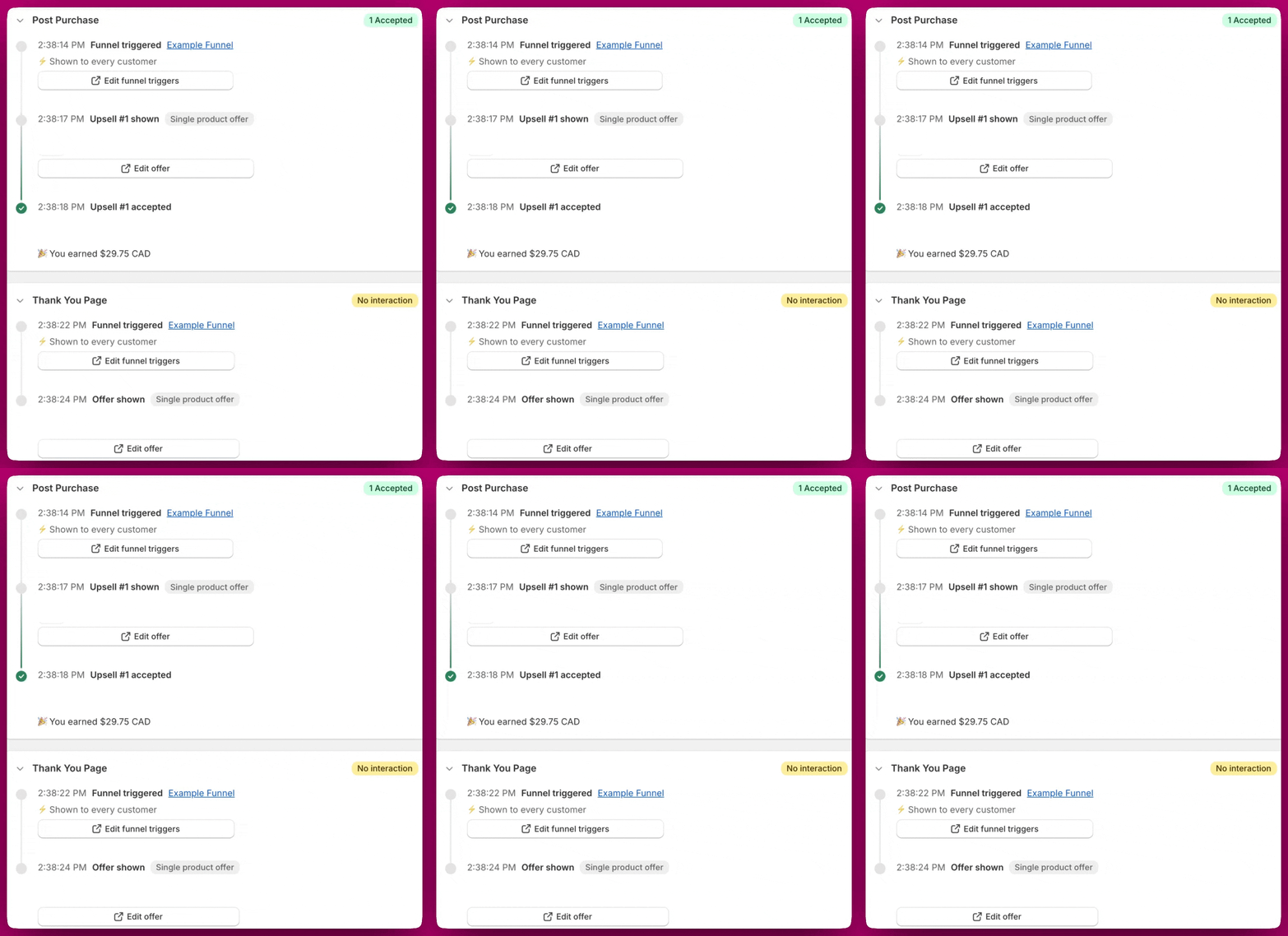
The detail view has up to four collapsible sections in the main column: Order Summary, Post Purchase, Thank You Page, and Rokt Thanks — the last shown only when the order has Rokt Thanks activity. Order Summary is expanded by default and the rest start collapsed; click a section header (the chevron on the left) to expand or collapse it. Each section displays a status badge at a glance, for example 1 Accepted or No interaction, so you can understand the outcome without expanding it. The right sidebar holds the section navigation plus separate Customer, Payment method, Order tags, and Discounts codes cards.
A collapsible section in the main column, open by default. It lists every product in the order — including any accepted upsells — with quantities and pricing, then the order subtotal and total, and finally the name of any Thank You Page funnel whose offer was accepted.The right sidebar holds four separate cards: Customer (shipping address, email, customer tags), Payment method, Order tags, and Discounts codes. All of it pulls from Shopify directly and requires no additional configuration.
A step-by-step milestone timeline of the post-purchase experience for this order.
Milestone
What it means
Funnel triggered
The funnel fired for this order. Shows the funnel name (click to edit triggers) and the trigger rule that selected it.
Offer shown
An offer was displayed. Shows the products that were presented, with thumbnails.
Offer accepted
The customer accepted the offer, including revenue amount. If the offer included a subscription upgrade and the upgrade failed at your subscription provider, a red banner appears beneath this milestone showing the specific cause and what to do to fix it.
Offer declined
The customer declined the offer.
Ineligible
Shopify blocked the post-purchase page for this order. Shows the specific Shopify eligibility reason.
Technical issue
The post-purchase experience failed to load — usually a server or fetch error outside Aftersell’s control. (PPU never shows a Not loaded status; that label belongs to Rokt Thanks.)
Subscription upgrade failed
The subscription upgrade at your provider failed after the offer was accepted. This row shows the specific failure cause and remediation steps.
If products were excluded from an offer, you’ll see a Products excluded warning beneath the milestone with the specific reason. Possible reasons include:
Ineligible
What caused it: Shopify blocked the order at a platform level.
No funnel triggered
What caused it: No funnel matched this order’s trigger conditions.
All products filtered
What caused it: Every product in the offer was filtered out by your settings.
Placement not configured
What caused it: The offer slot exists but no offer has been set up.
Product already in order
What caused it: The offer product was already in the customer’s original order.
Product OOS
What caused it: The offer product was out of stock at the time of the order.
Product Inactive
What caused it: The offer product was unpublished or inactive in Shopify.
Out of stock at required locations
What caused it: The offer product was out of stock at the locations required by the offer’s per-location inventory filter. Restock at those locations, or adjust the filter on the offer strategy.
Excluded by tag filter
What caused it: The offer product was excluded by a product-tag filter on the offer strategy. Review the filter or widen the product pool in your offer strategy.
Excluded by metafield filter
What caused it: The offer product was excluded by a product-metafield filter on the offer strategy. Review the filter or widen the product pool in your offer strategy.
Excluded by product filter
What caused it: The offer product was excluded by a product filter on the offer strategy. Review the filter or widen the product pool in your offer strategy.
Timer expired
What caused it: The post-purchase session timer ran out before the offer had a chance to load.
If you placed a test order and the PPU timeline shows no events or incomplete data, it may be because the order ID wasn’t available when the earliest events fired. This resolves automatically as the order completes.
Shows the same milestone structure as the PPU tab, filtered to Thank You Page events. A Technical issue badge means there was a problem loading the TYP experience for this order.Something not looking right? See the Order Browser Troubleshooting guide, or reach out via chat or email us at support@aftersell.app.
Was this page helpful?
⌘I
Assistant
Responses are generated using AI and may contain mistakes.